
Information from the NHS website
Granuloma annulare is a skin condition that often looks like a ring of bumps. It sometimes clears up without treatment, but it can take a long time and it may come back. See a GP if you have bumps or lumps on your skin that do not go away in a few weeks.
Symptoms of granuloma annulare
Granuloma annulare mainly affects children, teenagers and young adults, but older adults can get it too.
The most common symptom is small circular patches of pink, purple or skin-coloured bumps on the skin.
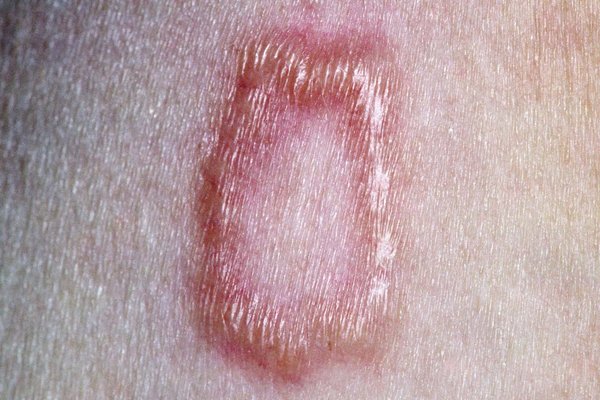
The patches can appear on 1 or more places on your body. They tend to affect bony areas such as the back of the hands, fingers, elbows and feet.
The patches are usually raised and grow slowly to around 2.5 to 5cm. They may eventually become flatter before gradually fading.
Granuloma annulare may be harder to see on black and brown skin.
In older adults, granuloma annulare is often made up of lots of small pink or skin-coloured bumps that cover large areas of the arms, legs or trunk (chest, tummy and back).
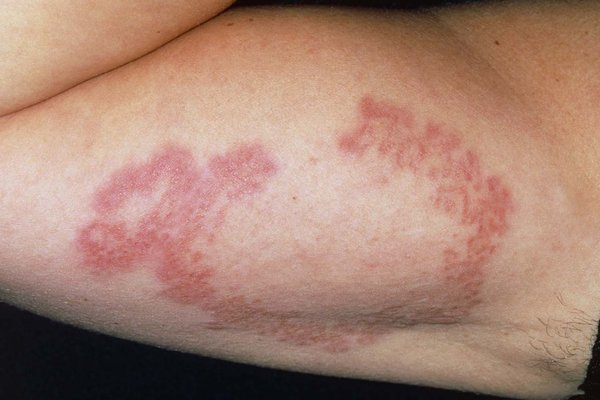
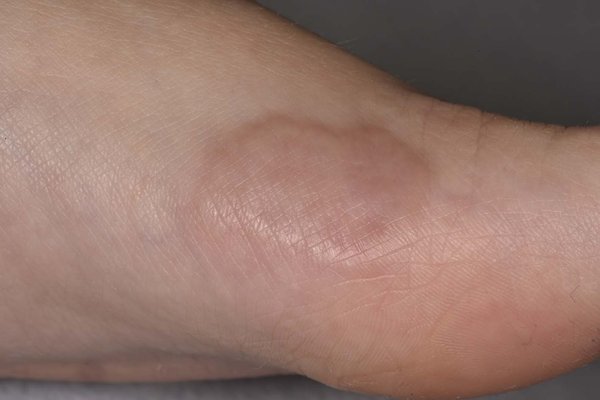
Less commonly, granuloma annulare can cause 1 or more firm, rubbery lumps just under the skin, usually on the feet and fingertips.
Other causes of circular skin conditions
If you have a circular rash it could be ringworm, a common fungal infection that can usually be treated with medicines from a pharmacy.
- you have lumps or raised areas of skin that do not go away within a few weeks
Treatments for granuloma annulare
Granuloma annulare is harmless and sometimes disappears without treatment. But it can take a long time to clear up (2 to 10 years) and it often comes back.
A skin specialist (dermatologist) may suggest treatment if granuloma annulare affects a visible or large area of your body and it’s affecting your life.
Treatments for granuloma annulare can include:
- steroid medicines – which may be creams, tablets or injections
- freezing small areas of skin (cryotherapy) – this can leave a permanent scar
- ultraviolet light therapy – light is used to reduce the inflammation in the skin
- skin camouflage (make-up)
There are different types of granuloma annulare and some can be difficult to treat. Your doctor will talk to you about your options.
Causes of granuloma annulare
Granuloma annulare is inflammation in the deep layer of the skin called the dermis.
The exact cause is unknown, but some types may be related to other health problems, such as diabetes and thyroid conditions like Graves' disease.
You cannot catch granuloma annulare from someone who has it.

Page last reviewed by the NHS: 10 July 2023. Information from the NHS website is licensed under the Open Government Licence v3.0. Doorstep Pharmacy does not change NHS content.